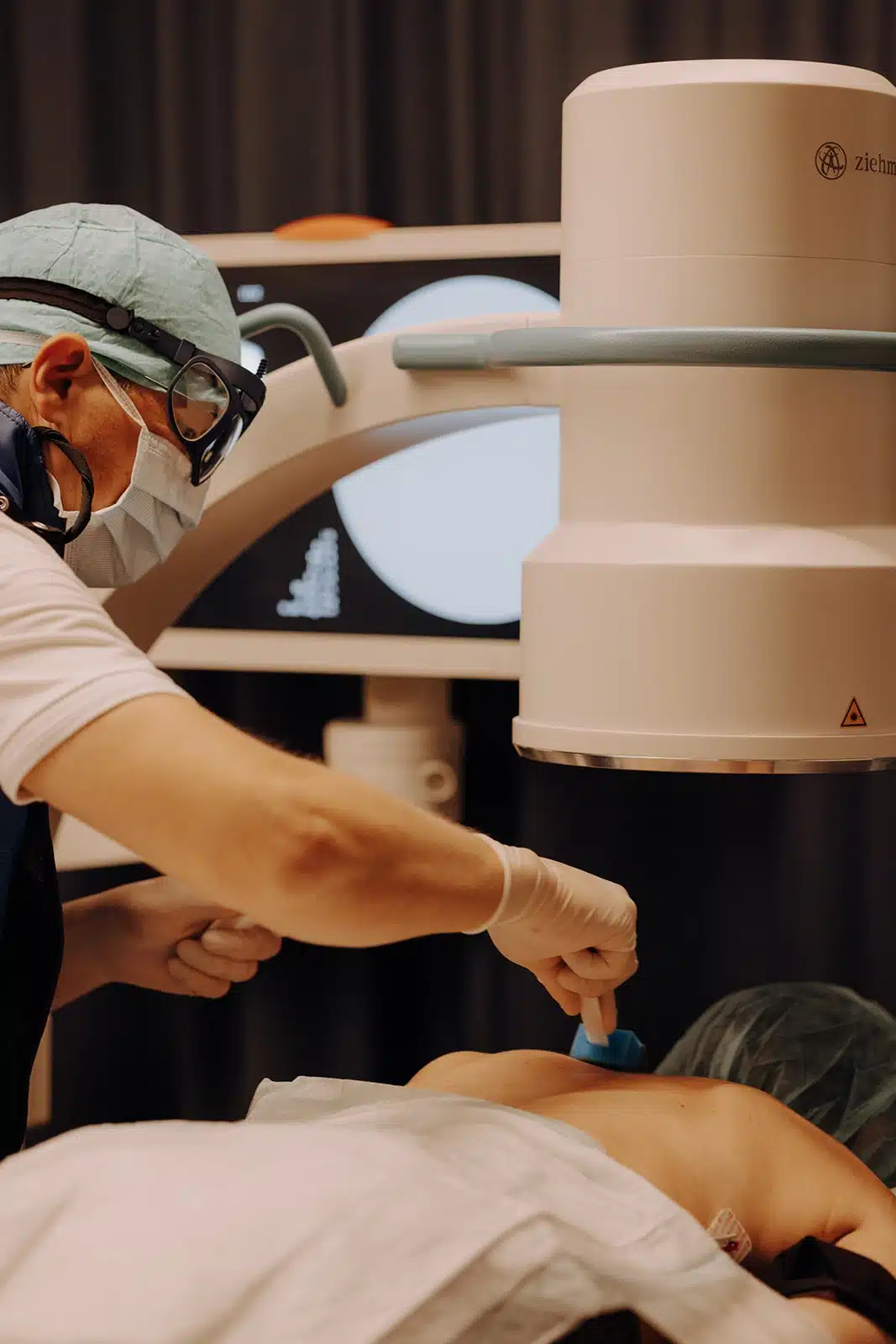
Radiofrequency treatment is used worldwide in various medical specialties and is an important treatment option in pain medicine in particular. It targets small nerves, known as medial branch nerves, which provide sensory innervation to painful facet joints. These medial branches are selectively ablated using radiofrequency. In a minimally invasive procedure under X-ray or ultrasound guidance, a special radiofrequency cannula is positioned at the medial branch. Radiofrequency current is then delivered through the cannula to the nerve tissue, generating heat and ultimately ablating the medial branch.
Radiofrequency therapies should follow the quality standards of the International Pain and Spine Intervention Society (IPSIS), formerly SIS. Two positive diagnostic test injections around the medial branch to be treated are an important prerequisite for deciding to perform radiofrequency treatment. This diagnostic block is known as an MBB (medial branch block).
With an appropriate indication and positive test injections, radiofrequency treatment of the medial branches usually produces significant pain reduction of 60 to 80% for 6 to 12 months. Pain may gradually return later, making repeat treatment necessary. This return of pain is explained by reinnervation of the facet joints.
Subsequent physiotherapy provides crucial support for successful radiofrequency treatment and helps achieve a lasting effect.
As with other pain medicine interventions, side effects and complications are generally very rare. Local pain can occur during the first 48 to 72 hours after radiofrequency treatment and subsequently subsides. With targeted preparation, the risk of infection or bleeding complications is minimal. Irreversible nerve damage is extremely rare (less than 1 in 10,000).