Current Overview

Radiofrequency Treatment

Degenerative, arthritic back pain is common and becomes more frequent with age. Increasing age, poor posture and physical strain can cause degenerative changes in the spine. These often affect the intervertebral joints (facet joints), potentially causing chronic neck and back pain. Many people in Switzerland experience this problem, which is often insufficiently controlled by physiotherapy and pain medication. Radiofrequency therapy, as a minimally invasive option, can often substantially improve pain control and ultimately quality of life. It can frequently reduce the need for painkillers and delay or even avoid spinal surgery.
Radiofrequenzbehandlung
How thermal radiofrequency works

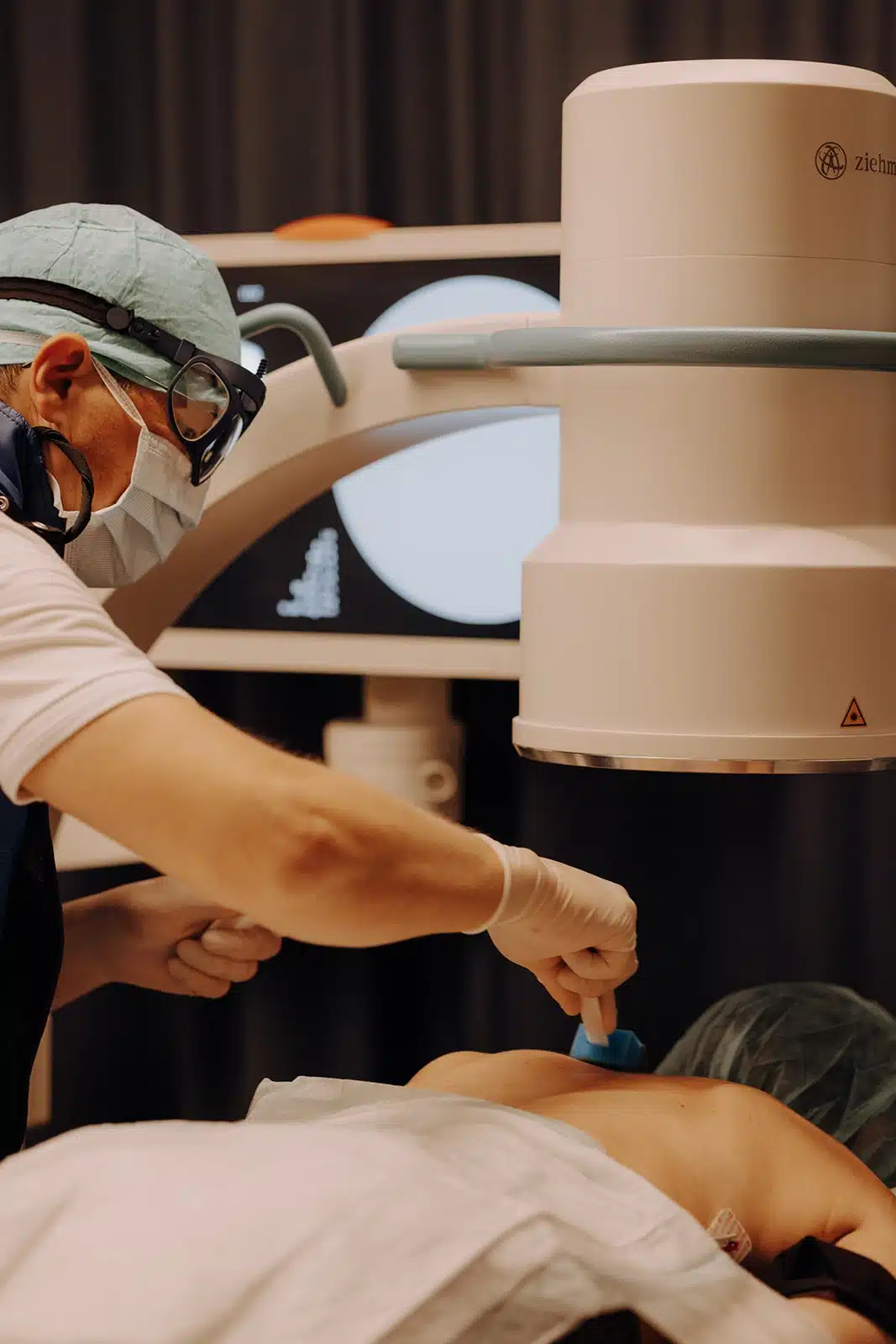
Radiofrequency treatment is used worldwide in various medical specialties and is an important treatment option in pain medicine in particular. It targets small nerves, known as medial branch nerves, which provide sensory innervation to painful facet joints. These medial branches are selectively ablated using radiofrequency. In a minimally invasive procedure under X-ray or ultrasound guidance, a special radiofrequency cannula is positioned at the medial branch. Radiofrequency current is then delivered through the cannula to the nerve tissue, generating heat and ultimately ablating the medial branch.

Prerequisite: positive test injections

Radiofrequency therapies should follow the quality standards of the International Pain and Spine Intervention Society (IPSIS), formerly SIS. Two positive diagnostic test injections around the medial branch to be treated are an important prerequisite for deciding to perform radiofrequency treatment. This diagnostic block is known as an MBB (medial branch block).

Effectiveness and duration of effect

With an appropriate indication and positive test injections, radiofrequency treatment of the medial branches usually produces significant pain reduction of 60 to 80% for 6 to 12 months. Pain may gradually return later, making repeat treatment necessary. This return of pain is explained by reinnervation of the facet joints.

Physiotherapy: an important factor in success

Subsequent physiotherapy provides crucial support for successful radiofrequency treatment and helps achieve a lasting effect.

Side effects and complications

As with other pain medicine interventions, side effects and complications are generally very rare. Local pain can occur during the first 48 to 72 hours after radiofrequency treatment and subsequently subsides. With targeted preparation, the risk of infection or bleeding complications is minimal. Irreversible nerve damage is extremely rare (less than 1 in 10,000).

Author
Dr. med. Jan Ludwigs
Institut für Interventionelle Schmerzmedizin SZ AG - ISSZ

More Articles

Der traditionelle SAMM-Kongress findet jeweils Ende November im Congress Kursaal Interlaken statt.
Spinal Cord Stimulation (SCS) in Interventional Pain Medicine

Learn more

Arzt in Operationskleidung bei der Vorbereitung auf einen medizinischen Eingriff im Operationssaal
Neck pain

Learn more

Back to Overview