Current Overview

Knee Pain

Chronic knee pain is a common problem, affecting around 15–20% of the population in Europe. There are many causes, including osteoarthritis (wear of the knee joint), conditions following injury or surgery, inflammation, nerve injuries and many more. Minimally invasive methods are used to investigate and treat chronic knee pain.
Knieschmerzen
An interventional approach to chronic knee pain

The first step in assessment is often to establish which nerves transmit the knee pain. Pain originating in the knee joint itself is often transmitted through the genicular nerves, whereas more superficial nerves, such as the saphenous nerve or its branches, tend to be involved in neuropathic pain. Targeted, selective local anaesthetic blocks of these nerves can help establish whether the pain originates in the joint or is neuropathic pain.

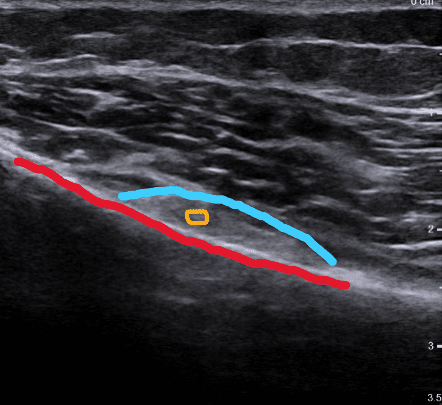
Ultrasound-guided diagnostic anaesthesia of a knee joint nerve
Ultraschallaufnahme einer gezielten Blockade eines Genikularnervs am Knie mit markiertem Knochen, Nerv und Lokalanästhetikum
Example of an ultrasound-guided genicular nerve block. Red: thigh bone; orange: nerve; blue: local anaesthetic.
Radiofrequency ablation of the knee joint nerves

If anaesthesia of the genicular nerves provides satisfactory temporary pain relief, radiofrequency ablation of these nerves may be a useful treatment. A special cannula is positioned as close as possible to the nerves under ultrasound or X-ray guidance, then heated using an electrical current (radiofrequency). This interrupts the pain-conducting nerves, providing longer-lasting pain relief.

Occasionally, cryoneurolysis may also be considered for neuropathic symptoms involving superficial nerve branches. Before radiofrequency ablation or cryoneurolysis, it is always important to establish in advance, using test anaesthesia (diagnostic nerve blocks), which nerve pathways carry the pain signals.

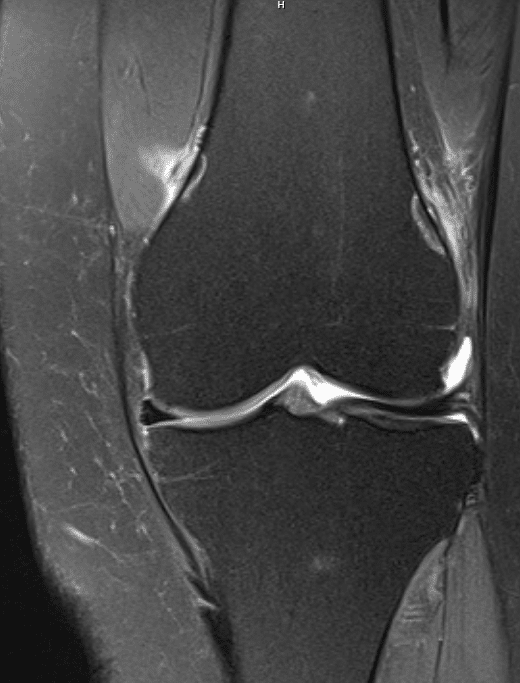
MRT-Aufnahme eines Kniegelenks nach Radiofrequenzablation der Genikularnerven
MRI scan of a knee joint after radiofrequency ablation of the genicular nerves. It shows the extent of the radiofrequency lesions on either side of the thigh bone.
When may radiofrequency ablation of the knee joint nerves be considered?

Radiofrequency ablation of the knee joint nerves may be useful in patients with chronic pain due to knee osteoarthritis who cannot otherwise be treated: for example, when knee replacement surgery is not an option, or when joint pain persists despite a knee prosthesis. Such treatment is generally considered only when conservative measures alone, such as pain medication or physiotherapy, have not achieved the desired result.

What are the risks and side effects?

Radiofrequency ablation of the knee joint nerves is a minimally invasive and relatively safe treatment. The most common side effects are temporary pain or mild inflammation at the needle entry site. Serious complications, such as nerve damage or infection, are rare. It must always be borne in mind that ablated nerves may regrow and that pain may return over time. The average duration of effect is between 3 and 12 months. If the treatment has been successful once, it can be repeated.

Author
Dr. med. Jürg Schliessbach
Institut für Interventionelle Schmerzmedizin Zürich AG - IISZ

More Articles

Der traditionelle SAMM-Kongress findet jeweils Ende November im Congress Kursaal Interlaken statt.
Spinal Cord Stimulation (SCS) in Interventional Pain Medicine

Learn more

Arzt in Operationskleidung bei der Vorbereitung auf einen medizinischen Eingriff im Operationssaal
Neck pain

Learn more

Back to Overview