Current Overview

New Guidelines for Lumbar Back Pain Published

Low back pain is among the most common reasons for consulting a doctor. With its new evidence-based guidelines, the SSIPM establishes a consistent, practical standard for assessment and interventional treatment, with clear recommendations on indications, patient selection and choice of procedure.
Guidelines in der Schmerzmedizin
1. Introduction

Low back pain is among the most common reasons for consulting a doctor in Switzerland. Previously, a consolidated national standard for interventional assessment and treatment was lacking.

The new guideline fills this gap, providing concrete recommendations on indications, patient selection and choice of procedure. It was developed by an interdisciplinary SSIPM working group using current evidence, international guidelines and the clinical experience of Swiss centres, and adopted through a multi-stage consensus process.

2. Main priorities of the guideline

The focus is on structured assessment, differentiated indications for epidural injections, facet and sacroiliac joint interventions, and radiofrequency ablation. The recommendations are complemented by clear criteria for follow-up and interdisciplinary collaboration with general practitioners, physiotherapy and psychology.

  • Structured assessment with clear criteria for imaging and differential diagnosis.
  • Differentiated indications for epidural, facet and sacroiliac interventions.
  • Radiofrequency ablation as an evidence-based option for selected patients.
  • Interdisciplinary collaboration with general practice, physiotherapy and psychology.
Note
The guideline emphasises the importance of careful patient selection and transparent information about the benefits, risks and alternatives of interventional procedures.
Person bei der Online-Registrierung an einem Computer
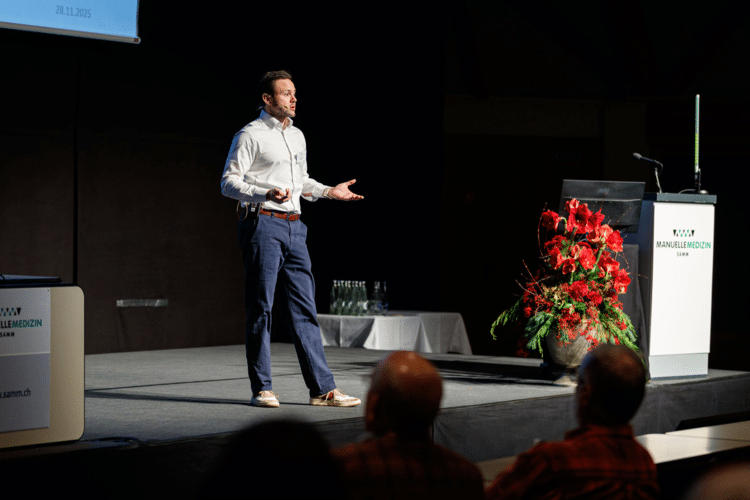
Continuing education on the new guideline during an SSIPM course.
3. Implementation in practice

The SSIPM is supporting the introduction of the guideline with a comprehensive education and communication programme. The aim is for recommendations to be implemented promptly and consistently in everyday care.

3.1 Continuing education and webinars

The SSIPM curriculum offers dedicated modules on the new guideline. Free online webinars are also available, in which the guideline's authors discuss concrete case examples.

3.2 A short version for practice

A concise summary is available for everyday clinical use, including flowcharts for determining indications and a one-page overview of the key recommendations.

3.3 Access for members

Members can access the full guideline free of charge in the protected members' area. Non-members can obtain the short version through the SSIPM website.

4. Conclusion

The new guideline provides Swiss pain medicine with a consistent, evidence-based standard for one of its most common indications. It strengthens the quality and safety of interventional procedures and supports doctors in delivering transparent, patient-centred care.

The SSIPM will review the guideline regularly and adapt it to new evidence. Feedback from clinical practice is expressly welcomed.

About the SSIPM
The Swiss Society for Interventional Pain Management (SSIPM) is the national professional society for interventional pain medicine. It represents more than 500 certified pain specialists in Switzerland and advocates high-quality, evidence-based and patient-centred care.
Postgraduate training and certification
The SSIPM is responsible for the national postgraduate training programme and IDSP certification (Interventional Diploma in Spinal Pain), ensuring consistently high standards in Swiss pain medicine.
Author

More Articles

Der traditionelle SAMM-Kongress findet jeweils Ende November im Congress Kursaal Interlaken statt.
Spinal Cord Stimulation (SCS) in Interventional Pain Medicine

Learn more

Arzt in Operationskleidung bei der Vorbereitung auf einen medizinischen Eingriff im Operationssaal
Neck pain

Learn more

Back to Overview