Current Overview

Pulsed Radiofrequency Treatment (pRF): A Modern Option for Treating Chronic Pain

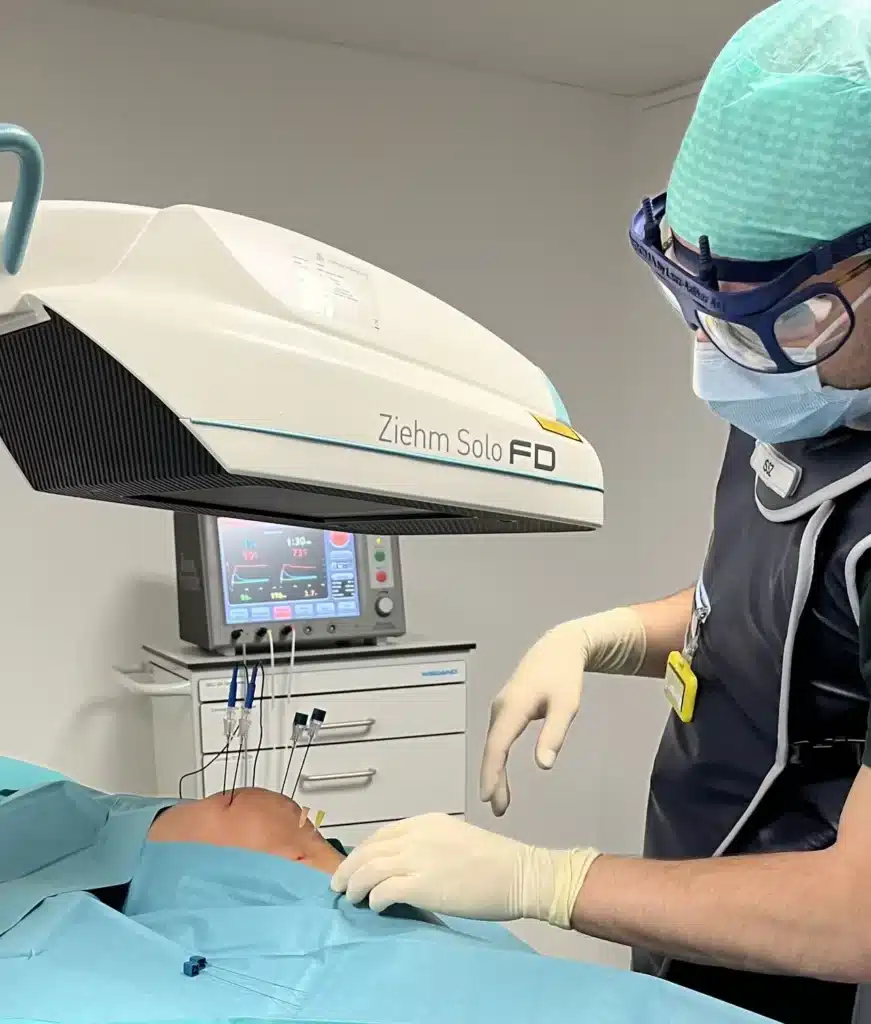
Pulsed radiofrequency treatment (pRF) is a minimally invasive, non-destructive method of treating chronic pain. Unlike thermal radiofrequency ablation, which uses heat to destroy nerves and interrupt their function, pRF aims to modulate pain conduction through electrical fields without permanently damaging tissue.
Arzt führt unter Röntgenkontrolle eine Radiofrequenz-Behandlung am Rücken eines Patienten durch.
Mechanism of action

In pRF, a probe is placed near the affected nerve under imaging guidance, such as ultrasound or X-ray. High-frequency electrical impulses, typically 400–500 kHz, are delivered through the probe in short pulses, warming the tissue to a maximum of 42 °C. This temperature is sufficient to influence the electrical activity of nerve cells without destroying them. The exact mechanism is not yet fully understood, but studies suggest that pRF reduces microglial activity in the spinal cord and inhibits pro-inflammatory cytokines such as interleukin-6 and TNF-α, contributing to pain relief. Ultimately, this influences the immune system and reduces the oxidative stress to which nerve cells are exposed.

Indications

pRF is mainly used for neuropathic pain, particularly when it can be attributed to specific nerves or nerve roots. Typical applications include:

  • Radiculopathies
  • Peripheral neuropathic pain associated with nerve lesions, including post-herpetic neuropathies
  • Trigeminal neuralgia
Prerequisite

Before pRF is performed, diagnostic blocks of the nerve structures with local anaesthetics are used to identify the source of pain and assess the chances of treatment success.

Treatment procedure

Treatment is performed on an outpatient basis under local anaesthesia. After positioning the probe, the target nerve is stimulated electrically to confirm the correct position, known as sensory testing. pRF is then applied for a defined period, usually a few minutes. Patients generally find the procedure causes little or no pain. Usually, two treatments are performed 2–3 weeks apart to enhance the effect.

Duration of effect and prospects of success

Pain relief following pRF varies between individuals. Many patients report an improvement in symptoms for several months, averaging around 3 to 6 months. In some cases the effect lasts longer. If pain returns, treatment can be repeated.

Advantages of pRF
  • Minimally invasive and performed on an outpatient basis
  • No permanent nerve damage
  • Suitable for patients who cannot or do not wish to receive corticosteroids
  • Low risk of side effects
Aim

The aim remains to resume movement during the period of reduced or absent pain, with the associated improvement in physical and, particularly, psychological well-being.

Conclusion

Pulsed radiofrequency treatment offers an effective and gentle alternative for treating chronic neuropathic pain syndromes. Its non-destructive mechanism and the possibility of repetition make it a valuable addition to the therapeutic options available.

Author
Dr. med. Jan Ludwigs
Institut für Interventionelle Schmerzmedizin SZ AG - ISSZ

More Articles

Der traditionelle SAMM-Kongress findet jeweils Ende November im Congress Kursaal Interlaken statt.
Spinal Cord Stimulation (SCS) in Interventional Pain Medicine

Learn more

Arzt in Operationskleidung bei der Vorbereitung auf einen medizinischen Eingriff im Operationssaal
Neck pain

Learn more

Back to Overview